“Coffee tree distribution” search results (2000)

Java Coffee java Jawa
Java Coffee, whose English name is java coffee, is also translated as Java Coffee. Java coffee (java Java coffee) planting distribution Java coffee beans (coffee powder) belong to: Robasda (Robusta) varieties, mainly distributed in African countries such as C ô te d'Ivoire, Angola, Madagascar and the Philippines, Vietnam and Indonesia (Java) and other places. Java coffee growing environment
2014-06-30 Mantenin coffee beans Sumatran coffee beans Java coffee beans civet coffee cat shit coffee
Coffee planting method Coffee Origin Colombian Coffee
The suitable climate of Colombian coffee provides a real natural pasture for coffee. Coffee trees in Colombia are mainly cultivated in the Andes, on steep slopes about 1300 meters above sea level, where the annual temperature is about 18 degrees Celsius, annual rainfall is 2000 to 3000 mm, latitude 1-11-15, longitude 72-78 the suitable climate of Colombia provides coffee.
2016-05-22 Coffee planting method Origin Columbia suitable Climate
Processing of Fruit of Fruit of Fine Coffee
Coffee is the fruit of a Rubiaceae plant growing about 6000 feet above sea level, distributed on the world's narrow subtropical axis; coffee trees grow green all the year round and can grow up to 20 feet tall, and are generally controlled at 8 to 10 feet for easy harvest. It takes three to five years for the coffee tree to bear fruit. First of all, it produces small white flowers that resemble jasmine in shape and size, and then wither and bear deep fruit.
2014-10-29 Coffee knowledge boutique caffeine coffee fruit coffee processing
Boutique Coffee Science about the growth zone of coffee beans
Coffee beans grow in tropical or subtropical agricultural gardens around the equator, called coffee belts, and travel to Japan with ships. When the brown coffee beans appear in front of your eyes, they have actually gone through a variety of different circulation processes and the hands of many people. Coffee is widely distributed in South America, Central America, the West Indies, Asia, Africa, Arabia, the South Pacific and
2014-11-27 Boutique coffee about coffee beans growth zone longer than equator for
Coffee common sense what is a coffee belt (COFFEE WORLD MAP)
Coffee trees grow in tropical or subtropical agricultural gardens centered around the equator and called coffee belts. Most of the coffee production is between the Tropic of Cancer, 25 degrees north of the tropical or subtropical equator and 30 degrees south of the equator. An area with an annual average temperature of 16-25 degrees Celsius, no Frosts Descent and rainfall of 1600-2000 mm. At present, coffee is mainly produced by seven countries.
2014-11-11 Coffee knowledge coffee common sense coffee belt
Introduction to the characteristics of high-quality coffee beans with flavor and taste in Tanzania coffee producing areas
Tanzania covers an area of 945087 square kilometers, of which Zanzibar is 2657 square kilometers. It consists of the mainland, Zanzibar and more than 20 small islands. Located in eastern Africa and south of the equator, the continent is bounded by the Indian Ocean to the east, Zambia, Malawi and Mozambique to the south, Rwanda, Burundi and the Democratic Republic of the Congo to the west, and Kenya and Uganda to the north. The coastline of the mainland is 840 km long.
2016-09-23 Tanzania coffee variety producing area flavor taste boutique coffee beans characteristics
Introduction to the characteristics of the Fine Coffee Flavor of Kilimanjaro in Tanzania
The eastern coastal areas and inland lowlands of Tanzania have a savanna climate, while the western inland plateau has a tropical mountain climate, with an average temperature of 21-25 ℃ in most areas. More than 20 islands in Zanzibar have a tropical maritime climate, hot and humid all the year round, with an annual average temperature of 26 ℃. [6] rainfall types can be divided into bimodal distribution and unimodal distribution. Areas with double bee distribution of rainfall include
2016-08-16 Aroma thick Tanzania Kili Mazar Luo boutique boutique coffee flavor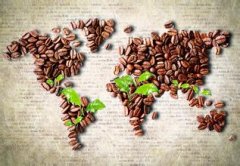
Coffee belt
Coffee trees are developed in tropical or subtropical agricultural gardens centered around the equator and called coffee belts.
2014-06-19 Coffee knowledge coffee belt coffee encyclopedia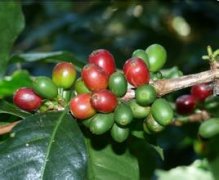
Coffee cultivation requirements for the environment
Coffee cannot be grown in any environment, because it is originally a tropical rainforest plant, and in the development of the system, it develops habits that require calm wind, warm, shade or semi-shade and humid environments. Therefore, coffee has strict requirements for planting conditions. We call the strip of area on both sides of the equator, between 25 degrees north and south latitude, suitable for coffee growth, coffee belt.
2014-09-01 coffee knowledge coffee growing coffee tree coffee tree growing requirements
Processing of Fruit of High-quality Coffee
Coffee is the fruit of a Rubiaceae plant growing about 6000 feet above sea level, distributed on the world's narrow subtropical axis; coffee trees grow green all the year round and can grow up to 20 feet tall, and are generally controlled at 8 to 10 feet for easy harvest. It takes three to five years for the coffee tree to bear fruit. First of all, it produces small white flowers that resemble jasmine in shape and size, and then wither and bear deep fruit.
2015-01-19 Boutique coffee common sense fruit processing growing at 000 feet above sea level
Flavor and taste characteristics of coffee plantation in Tanzania introduction to Arusha Coffee Manor
The topography of Tanzania is high in the northwest and low in the southeast, showing a ladder shape. The eastern coast is a lowland, the western inland plateau accounts for more than half of the total inland area, and the East African Rift Valley runs from east to west from Lake Malawi to the north and south. The Kibo peak of Mount Kilimanjaro in the northeast is 5895 meters above sea level, which is the highest peak in Africa. [6] Climate Tanzania Beach Tanzania Beach Tanzania East Tanzania
2016-08-15 Tanzania coffee manor producing area flavor taste characteristics Arusha introduction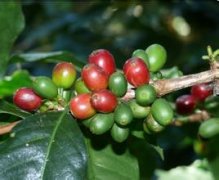
A brief talk on the basic knowledge of Fine Coffee with Coffee beans
1. Summary: coffee is a perennial evergreen shrub or small tree of Rubiaceae. It is native to tropical Africa and has been cultivated for more than 2000 years. The Arabs began to grow coffee in 525 BC, and it was popular for Arabs to stir-fry coffee beans. They began to grow coffee beans on a large scale after the 15th century, and were widely distributed in the tropics and subtropics of Europe, Asia, Africa and Latin America after the 18th century.
2015-06-04 Talking about coffee beans boutique coffee basics common sense overview grass for many years
Yunnan small Coffee introduces the characteristics of Yunnan Coffee the taste and flavor of Yunnan boutique coffee
Yunnan small-grain coffee: Yunnan small-grain coffee, Rubiaceae, coffee genus, the planting area is mainly distributed in Lincang, Baoshan, Simao, Xishuangbanna, Dehong and other states. [1] small grains of coffee are native to Ethiopia or Arabian Peninsula. It is cultivated in Fujian, Guangdong, Hainan, Guangxi, Sichuan, Guizhou and Yunnan. The Origin of Yunnan small Coffee: in 1892, French missionary Father Tian
2016-03-19 Yunnan small grains coffee introduction characteristics boutique taste flavor
Summary of processing methods and characteristics of Coffee Fruit
Coffee is the fruit of a Rubiaceae plant growing about 6000 feet above sea level, distributed on the world's narrow subtropical axis; coffee trees grow green all the year round and can grow up to 20 feet tall, and are generally controlled at 8 to 10 feet for easy harvest. It takes three to five years for the coffee tree to bear fruit. First of all, it produces small white flowers that resemble jasmine in shape and size, and then wither and bear deep fruit.
2015-03-04 Coffee common sense fruit processing methods characteristics overview coffee growth altitude
Summary of the processing and characteristics of Coffee Fruit
Coffee is the fruit of a Rubiaceae plant growing about 6000 feet above sea level, distributed on the world's narrow subtropical axis; coffee trees grow green all the year round and can grow up to 20 feet tall, and are generally controlled at 8 to 10 feet for easy harvest. It takes three to five years for the coffee tree to bear fruit. First of all, it produces small white flowers that resemble jasmine in shape and size, and then wither and bear deep fruit.
2015-04-24 Coffee common sense fruit processing characteristics overview coffee growing in altitude 000
A Summary of the processing and characteristics of Coffee Fruit
Coffee is the fruit of a Rubiaceae plant growing about 6000 feet above sea level, distributed on the world's narrow subtropical axis; coffee trees grow green all the year round and can grow up to 20 feet tall, and are generally controlled at 8 to 10 feet for easy harvest. It takes three to five years for the coffee tree to bear fruit. First of all, it produces small white flowers that resemble jasmine in shape and size, and then wither and bear deep fruit.
2014-11-26 Coffee knowledge coffee common sense coffee fruit
Boutique Coffee Science detailed explanation of Coffee Belt (COFFEE WORLD MAP)
Coffee trees grow in tropical or subtropical agricultural gardens centered around the equator and called coffee belts. Most of the coffee production is between the Tropic of Cancer, 25 degrees north of the tropical or subtropical equator and 30 degrees south of the equator. An area with an annual average temperature of 16-25 degrees Celsius, no Frosts Descent and rainfall of 1600-2000 mm. At present, coffee is mainly produced by seven countries.
2014-10-18 Coffee knowledge boutique coffee science coffee belt
Introduction to the description of the grinding degree, taste and flavor of Costa Rican Yerzaro coffee with good sweetness
Costa Rica accounts for only 0.03% of the world's land area, but with nearly 4% of the world's species, Costa Rica is one of the countries with the richest biological species in the world. 26% of the land area is a national park or nature reserve, including 11 wetlands, 2 biological reserves and 3 World Natural Heritage sites. The national forest coverage rate is 52%. Natural resources include iron, manganese, mercury, bauxite,
2016-09-30 Sweetness good Costa Rica Yelsa Luo coffee coffee grinding taste special
Processing and characteristics of Coffee Fruit
Coffee is the fruit of a Rubiaceae plant growing about 6000 feet above sea level, distributed on the world's narrow subtropical axis.
2014-07-08 Coffee knowledge coffee bean processing coffee bean characteristics coffee encyclopedia
Introduction to coffee flavor and taste of coffee producing area in Hasunda Coffee Garden, Ecuador
Located in the middle of the Pacific Ocean, the Cologne Islands (Galapagos Islands) is more than 900km east from the continental coast and covers an area of 7800 square kilometers, including 7 large islands and about 70 small islands, all of which are composed of volcanic cones and volcanic lava, mainly in the Guayaquil Bay. Oil fields are also found in the Amazon plain. Gold and silver are distributed in Machaki and Saluma and other places.
2016-09-22 Ecuador Hasenda coffee garden coffee flavor taste producing area manor introduction